Rome — Tips & Tricks
Practical guide · from our own experience since 2021
VIEWSCREEN // TIPS & TRICKS
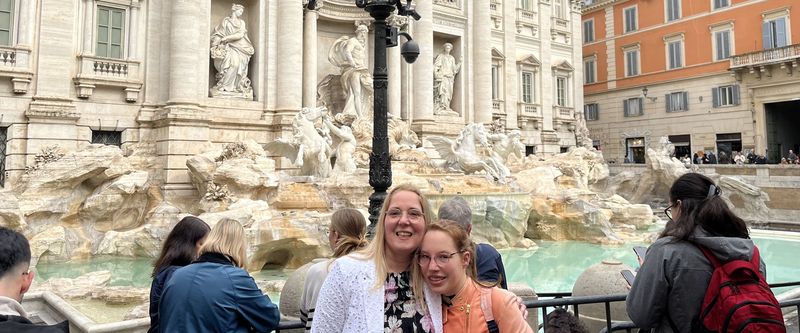
ROME — WHAT WE'VE LEARNED
Everything we've learned since our first Rome trip in 2021, our fourth visit already in 2025, all in one place: how we get there, how we get around the city, where we eat best, and a stack of practical things that make the difference between a smooth trip and a lot of hassle.
Getting there and back
From NL to Rome
- From Rotterdam: Transavia, direct to Fiumicino (just over 2 hours' flying).
- From Eindhoven: Ryanair.
- Fancier: the pricier airlines (KLM etc.) from Amsterdam.
- Getting from the airport into the centre: the Leonardo Express is fastest (32 minutes, direct to Termini) but also the priciest (€14). The shuttle buses are cheaper, but note: Terravision and SIT Bus Shuttle run two separate routes from Fiumicino, not one bus with two stops: one to Termini (from €4, ~45 min), one to the area near the Vatican (Via Crescenzio stop, from €6, ~40 min). Book the route that matches where you're staying.
Getting around the city
Metro, bus and transport cards
- We always use public transport (bus and metro), usually with a multi-day pass rather than single tickets. Current ATAC prices: single ticket (100 minutes) €1.50, Roma 24 ore €8.50, Roma 48 ore €15.00, Roma 72 ore €22.00, and the weekly pass (CIS, 7 giorni) €29.00; work out what pays off against your number of travel days.
- The metro lines (A/B/B1/C) are usually on time and sometimes very busy. Rome also regularly has strikes: these have a legally required "fascia di garanzia" (guaranteed service band): on weekdays service is guaranteed from the start of service until 8:30 and between 17:00-20:00, outside those hours public transport can grind to a halt entirely. Check the announcements just before you travel.
Attractions
Tickets: book direct and book early
- We book single tickets, not a pass.
- Book skip-the-line tickets as far ahead as possible: the Colosseum Attic/Belvedere tickets (the upper tiers) in particular are special, but often sell out within the 30-day booking window.
- The combined Colosseum+Forum+Palatine ticket gives you a 24-hour window around your Colosseum time slot: book the Colosseum for, say, mid-morning, and you can still visit the Forum and Palatine the following morning on the same ticket.
- Always book directly on the official site, never through resellers, as they're always more expensive.
Food & drink
Our favourite spots
- Trattoria Pizzeria Gli Archi: our favourite, near the Vatican Museums.
- Tonnarello: really good, a well-known chain going back 150 years, with several branches in Trastevere.
- Coffee Time 49: our regular breakfast spot, in the Trionfale neighbourhood.
- Antica Roma 013: a drink in the afternoon with a view of the monument on Piazza Venezia.
- Very much depends on where you're staying: avoid the obvious tourist traps near famous landmarks like the Trevi Fountain.
- Watch the bill: in Rome/Lazio the classic "coperto" (cover charge) is actually officially banned. Restaurants there often charge a separate "pane" or "servizio" line instead: that's the item to watch for, not "coperto" itself.
Preparation
What to know for your first time
- As an EU citizen you only need a valid ID card or passport, no vaccinations required.
- Colosseum: book ahead, for example mid-morning, so you can do the Palatine and Forum in the afternoon.
- Vatican Museums: always busy, so book ahead; for a first visit, consider a guide.
- Dress code: at the Pantheon and St. Peter's, both shoulders and knees need to be covered, so no shorts, bare midriff or plunging necklines. If in doubt, there are kiosks nearby selling or renting something to cover up with.
First visit
How many days do you need?
Five days is the ideal length for a first visit, in our view: ideally flying out in the morning and back in the evening, to maximise your time. With 5 days you always get 3 full days to do everything.
Money & practical matters
What else you should know
- Card payment is accepted everywhere.
- Tipping isn't obligatory, a normal tip is appreciated.
- Data simply falls under the EU roaming rules ("roam-like-at-home"). Besides the Dutch type (F), Italy also uses its own socket type (L), but in practice most Dutch plugs just fit; bringing an adapter as a backup can't hurt.
- We've personally never drunk from the "nasoni" (Rome's public drinking fountains), but the water is perfectly safe.
Culture & customs
Small things that make a difference
- The same applies on the metro as on the London Tube: don't seek out contact, people prefer to travel in silence.
- Never accept anything "free" on the street: being offered a bracelet or rosary almost always ends in hassle or having to pay after all. We simply ignore street vendors, especially around the Trevi Fountain.
- At ticket machines (especially at Termini), immediately decline anyone offering to "help": a well-known way to get money out of you or push an overpriced ticket.
- We're always recognised at Antica Roma 013 and Coffee Time 49, and at Gli Archi too, quite something for a city with millions of tourists a year.